How Casino-Style Entertainment Fits Into Kon Tum Leisure Stories
Casino-style entertainment in Kon Tum can be described with greater precision by separating game mechanics, screen design, and the story’s actual setting.

The most common mistake in writing about casino-style entertainment in Kon Tum is using the place name as decoration while leaving the game itself vague. That costs readers a clear picture of what is being portrayed: a card game, a spinning interface, or simply casino-inspired imagery can each serve a different purpose in a story.
Kon Tum is more than a backdrop when a story connects its setting to the details of a scene. The useful question is not whether a game “belongs” to the place, but how its rules, objects, and presentation contribute to a particular portrayal.
Read the scene’s details
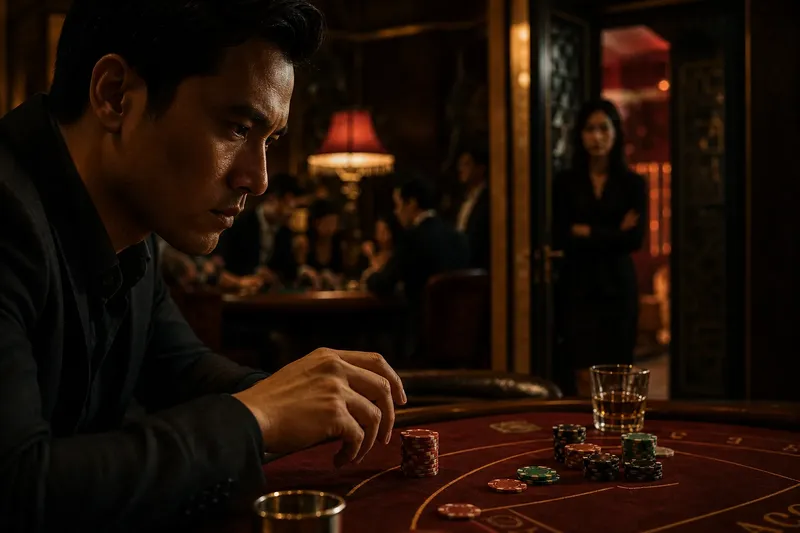
Casino-style entertainment can borrow a familiar mechanic, such as choosing a card or waiting for a random result. Casino-themed material may use chips, green felt, bright lights, or card imagery without depicting a playable game at all. Naming the distinction helps explain what the scene is doing.
Start with what appears on the page or screen. Is someone making a choice, waiting for an outcome, reacting to another player, or passing a casino-like sign in the background? Those details point to different kinds of entertainment and different storytelling functions.
A deck of cards in a stage scene works like a suitcase in a travel drama: it can suggest a journey without proving that the actor has gone anywhere. Casino imagery can likewise establish mood, signal risk, or reveal a character’s interests without describing a real leisure activity in Kon Tum.
Trace the setting
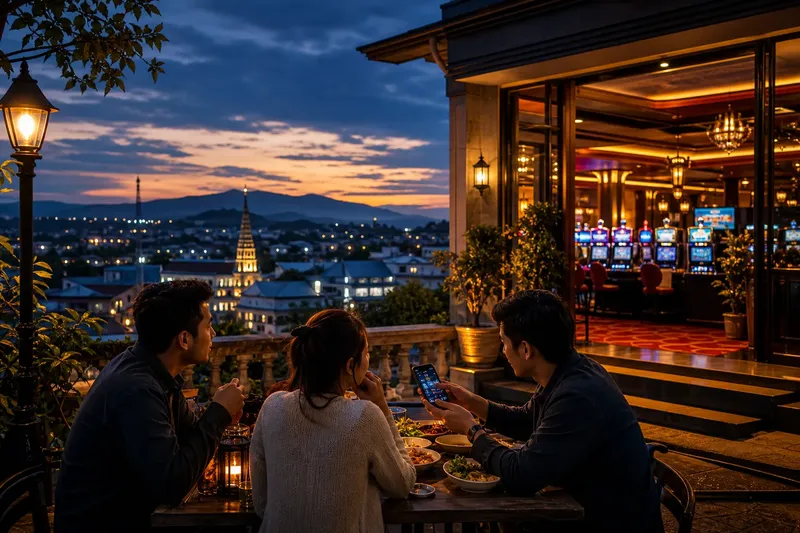
Look at how the story locates the activity. A character may be shown using a phone in a room, meeting others around a table, or appearing in a fictional venue. Those are distinct settings, even if the game uses the same symbols or rules.
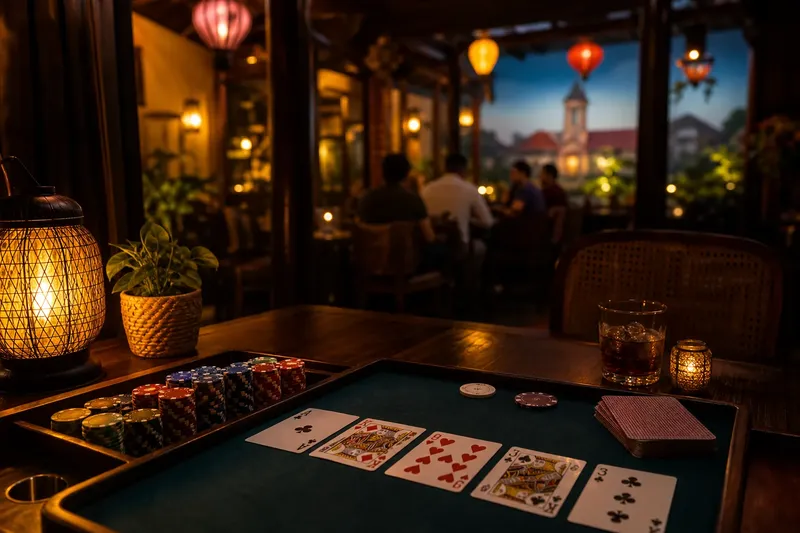
Pay attention to the objects that anchor the scene: a handset and headphones suggest a screen-based portrayal; a shared table and visible cards suggest face-to-face play; a sign or decorated backdrop may only establish atmosphere. Describe what is present rather than filling gaps with assumptions about local venues or habits.
Say an invented writer is revising a short scene set in Kon Tum. The draft says, “At a cafe, Mai plays a slot-style game on her phone while waiting for a friend,” but gives no support for a broader claim about residents. The writer keeps the phone, the game interface, and the waiting scene, then removes the sentence saying the activity is popular locally. The revised passage still uses Kon Tum as the story’s setting while making no unsupported claim about who else plays.
Choose accurate game terms
Specific language makes a description more vivid and less likely to blur mechanics with decoration. Use the visible or stated features to choose a term:
- Cards and turns: If the scene shows players taking turns with cards, describe the card game or its stated rules; if it only shows cards as props, describe the imagery instead.
- Wheel or draw: If the action centers on waiting for a random result, call attention to that chance-based mechanic; if the scene does not show how the result is chosen, avoid naming a specific game.
- Reels or symbols: If a screen visibly imitates spinning reels and symbols, “slot-style interface” may fit; if it only uses casino colors or sounds, call it casino-themed presentation.
- Shared table: If characters respond to one another around a table, describe the social interaction; if they sit apart or act alone, do not frame the scene as group play.
- Fiction or report: If the source is scripted, call it a portrayal; if it describes an actual event, state only the details the account establishes.
- Phone or venue: If the scene shows a person using a service on a device, distinguish the person’s depicted location from any venue associated with that service; if no venue is named, do not invent one.
Each decision changes the reader’s mental picture. “A character watches a reel animation on a phone” says something different from “friends play cards at a table,” even if both scenes borrow casino conventions.
What do the terms mean?
Does casino-style mean a casino setting?
No. It describes a format or presentation that resembles casino games, and it can appear in fiction, a party activity, or a digital interface. Name the setting separately if the account provides it.
How does casino-themed differ?
Casino-themed usually points to visual cues such as chips, cards, or roulette imagery. Casino-style more often suggests that the activity borrows recognizable mechanics, such as turns or a chance-based outcome.
How can Kon Tum matter to a fictional scene?
The place can shape the scene through its named location, surrounding details, or role in the plot. Make that connection specific to the story rather than treating the setting as evidence of a broader leisure custom.
What should a description establish?
Identify who is portrayed, what action is visible, and where the scene places it. If the source leaves one of those details unclear, narrow the wording instead of supplying an answer.
Make the place specific
When describing casino-style entertainment in Kon Tum, connect the place to a concrete feature of the account: a named scene, a character’s route, or the way a story contrasts a screen with a shared space. That approach gives the setting a role beyond a label while keeping the game’s mechanics distinct from its imagery.
A useful description can be modest and still be memorable. If the source only shows a character tapping a casino-like interface, say that; the exact visual detail often tells readers more than an unsupported claim about local leisure ever could.